
brainwavehub

September 12, 2025

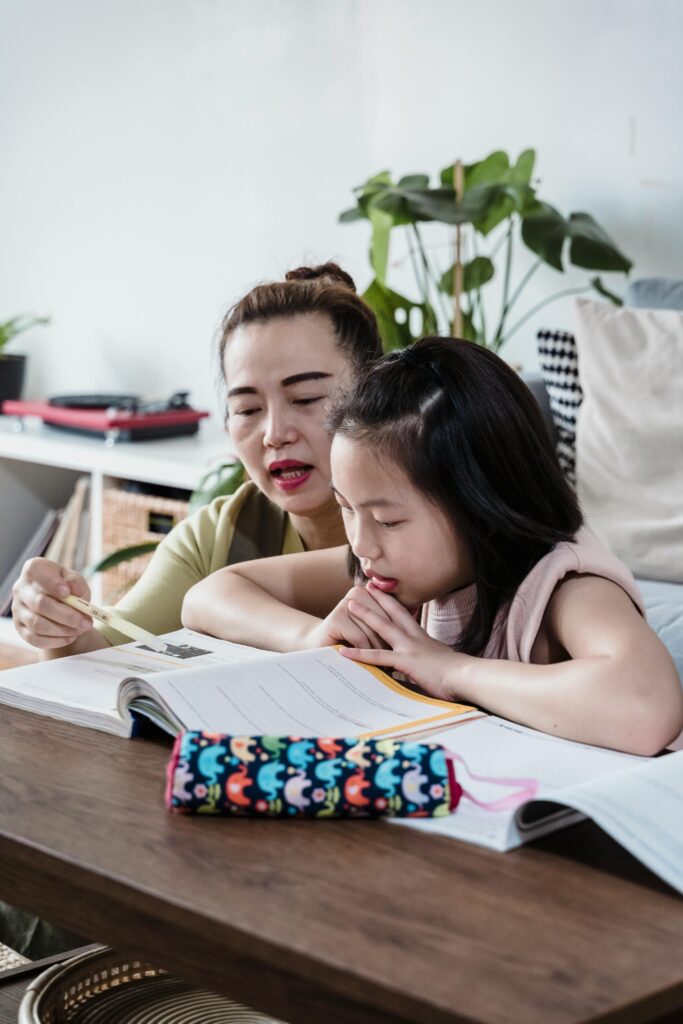
A mother helps her young daughter with homework in a cozy home setting. Ideal for family and education themes.
Parent's Involvement in children Education

“Parental Involvement in Children’s Education”

The positive impact of parental involvement on a child’s academic and personal development :- Research consistently shows that when parents are actively engaged in their child’s education, it leads to a number of benefits. This can include: Parental involvement is the active involvement of a parent in the education of their kid. Parents can help at home in a number of ways. It can include reading with their kids, keeping an eye on their tasks, and talking about the school day and events. Parents could help out at school by working in classes, going to parent-teacher meetings, or helping to set up events. There is a link between positive parental involvement and doing well in school. When parents are excited about their child’s school, they get involved, talk to, and engage their child in the learning process. It makes the child better at school and makes them more successful overall. Importance of Parent’s Involvement in Child’s Education :- 1. Improved Academic Performance 2. Enhanced Social and Emotional Development 3. Stronger Parent-Teacher Relationships 4. Positive School Environment A child’s general growth and academic achievement depend heavily on positive parental involvement in education. Active parents provide a loving atmosphere that promotes resilience, confidence, and curiosity. Children with interested parents do better in school, behave better, and grow into more confident social beings. In addition to helping their kid succeed academically, parents who actively participate in their child’s education provide the groundwork for their child’s lifetime learning and overall well-being.

Smiling girl giving thumbs up in front of a chalkboard with math equations, wearing a white top.
Top Challenges Faced by Coaching Institutes

Top Challenges Faced by Coaching Institutes – And How Smart Technology Solves Them.

What Solutions Can Help Coaching Institutes Overcome Modern Classroom Challenges? Today’s coaching institutes face a dynamic and competitive environment, with challenges that go beyond traditional teaching methods. The increasing demand for coaching, particularly for competitive exams, has created a crowded market. This has led to issues such as aggressive marketing, misleading claims, and a “one-size-fits-all” teaching approach that may not cater to individual student needs. Furthermore, the reliance on “star teachers” can make a coaching center vulnerable to disruptions if key staff members leave. Students, on the other hand, are now more technologically aware and expect a more interactive and engaging learning experience. Traditional tools like chalkboards and projectors often fail to capture their attention and can lead to disengagement. Smart classroom technology offers a solution to these pain points by: The adoption of smart classroom technology is not just about using new gadgets, but about a fundamental shift in pedagogy. It’s about moving toward a more student-centric, interactive, and data-informed approach to education that can address the challenges of today and prepare students for the future. How Can Institutes Deliver a Seamless Hybrid Learning Experience? To overcome these obstacles, a range of technologies are essential for creating an effective hybrid learning environment. Here are some of the key features and best practices for using video technology in a hybrid classroom: Key Features of a Hybrid Classroom Camera Best Practices for Hybrid Learning:- Engage Both Groups: Design lessons that actively involve both in-person and remote students. This can include using interactive tools like polls, breakout rooms, and digital whiteboards that everyone can access. Ensure Clear Audio: High-quality video is not enough if the audio is poor. Use a microphone that can capture the teacher’s voice clearly, as well as the voices of students in the classroom, to ensure that remote participants can follow discussions. Create a Consistent Experience: Strive to provide an equivalent, though not identical, learning experience for both groups. This means that a lesson plan should consider the unique needs of both in-person and online learners. Provide Technical Support: Technical issues can be a major disruption. Providing clear instructions and having a plan for troubleshooting can help minimize these problems. Record Sessions: Recording and archiving lessons allows students who may have missed a class or need to review a concept to do so at their convenience. This also creates valuable study material for all students. Considering the technology and implementing these best practices, coaching institutes can bridge the gap between in-person and online learning, providing a more effective and engaging experience for all their students.

Scroll to Top